Egypt Brings Together Ministers and Representatives of 21 Mediterranean Countries, Regional and International Organizations to Discuss the Protection of the Mediterranean
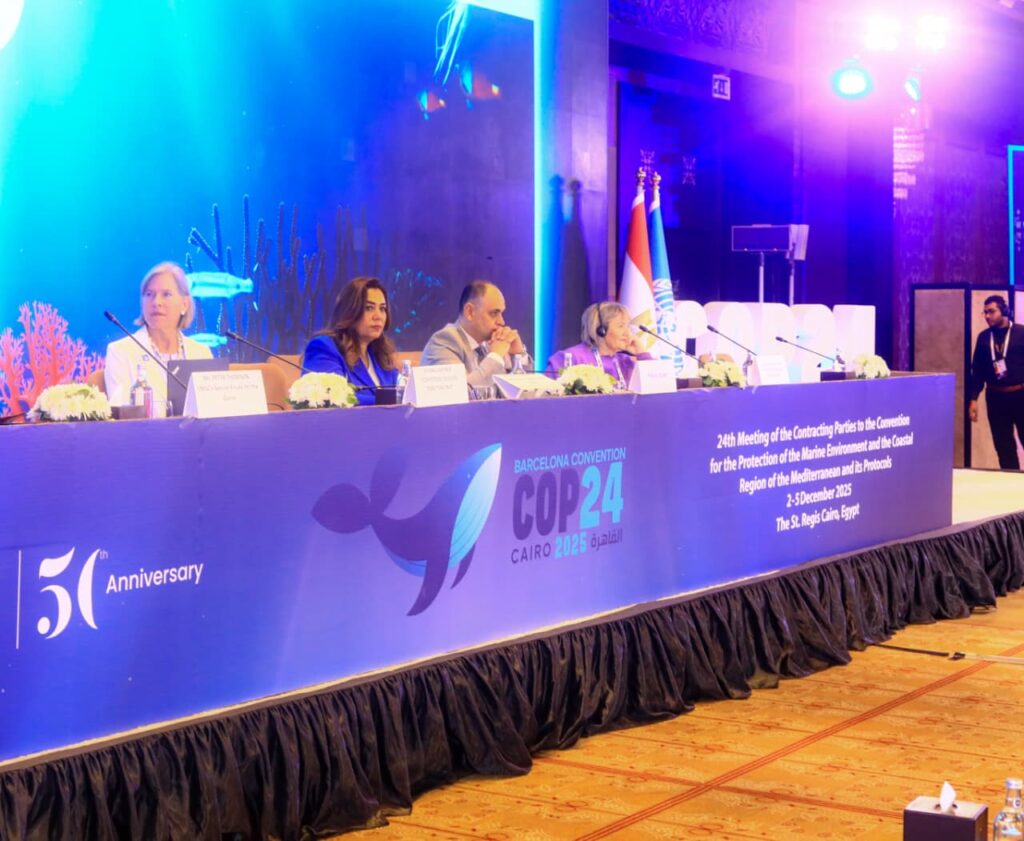
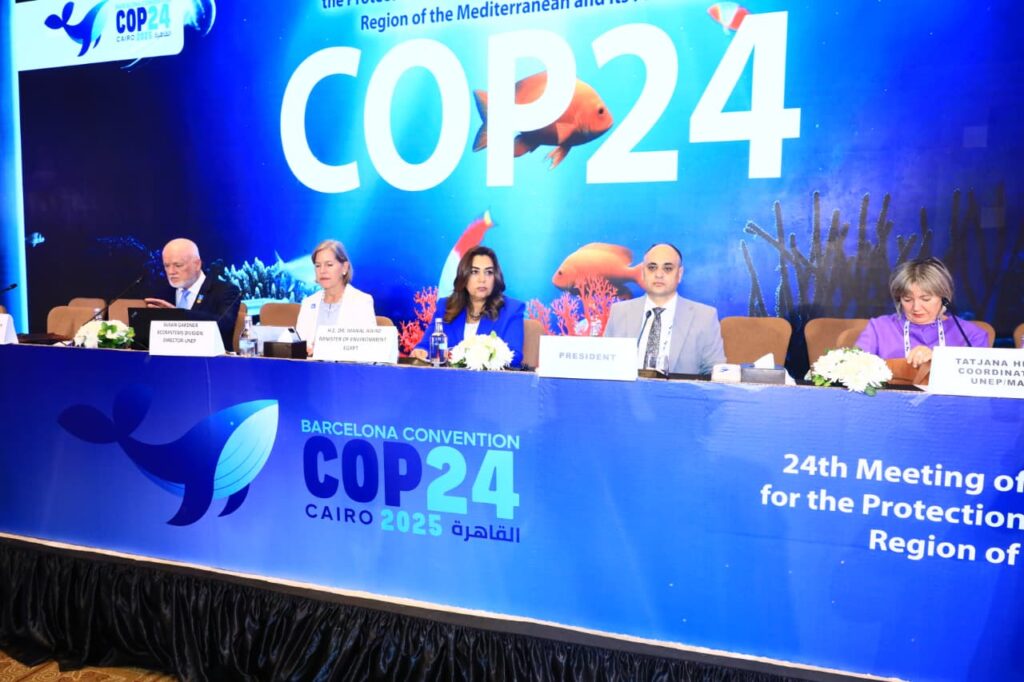
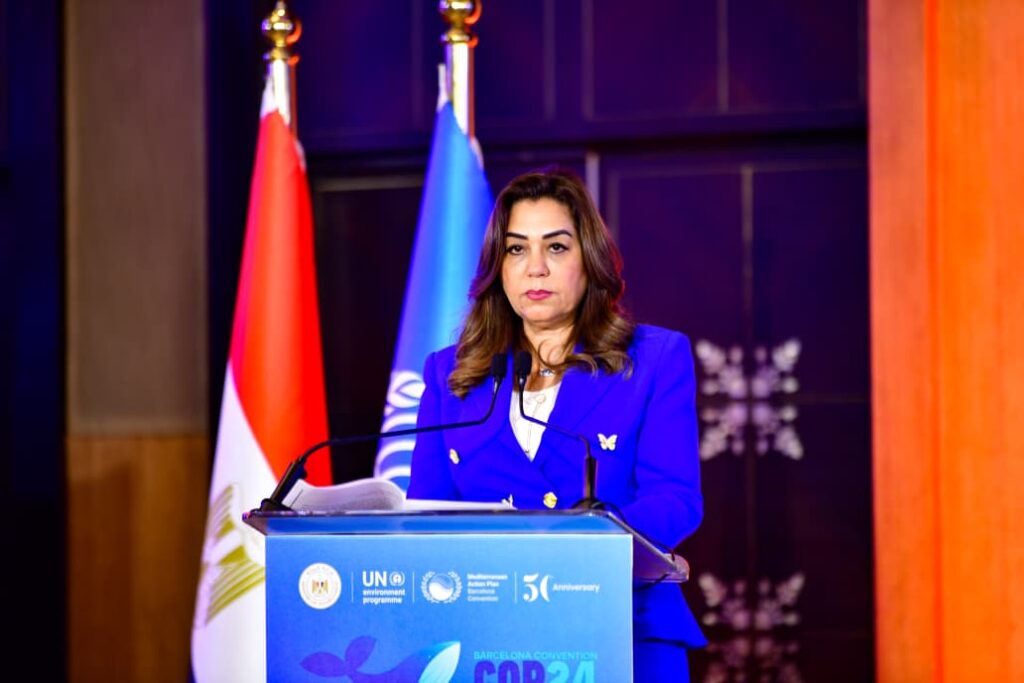
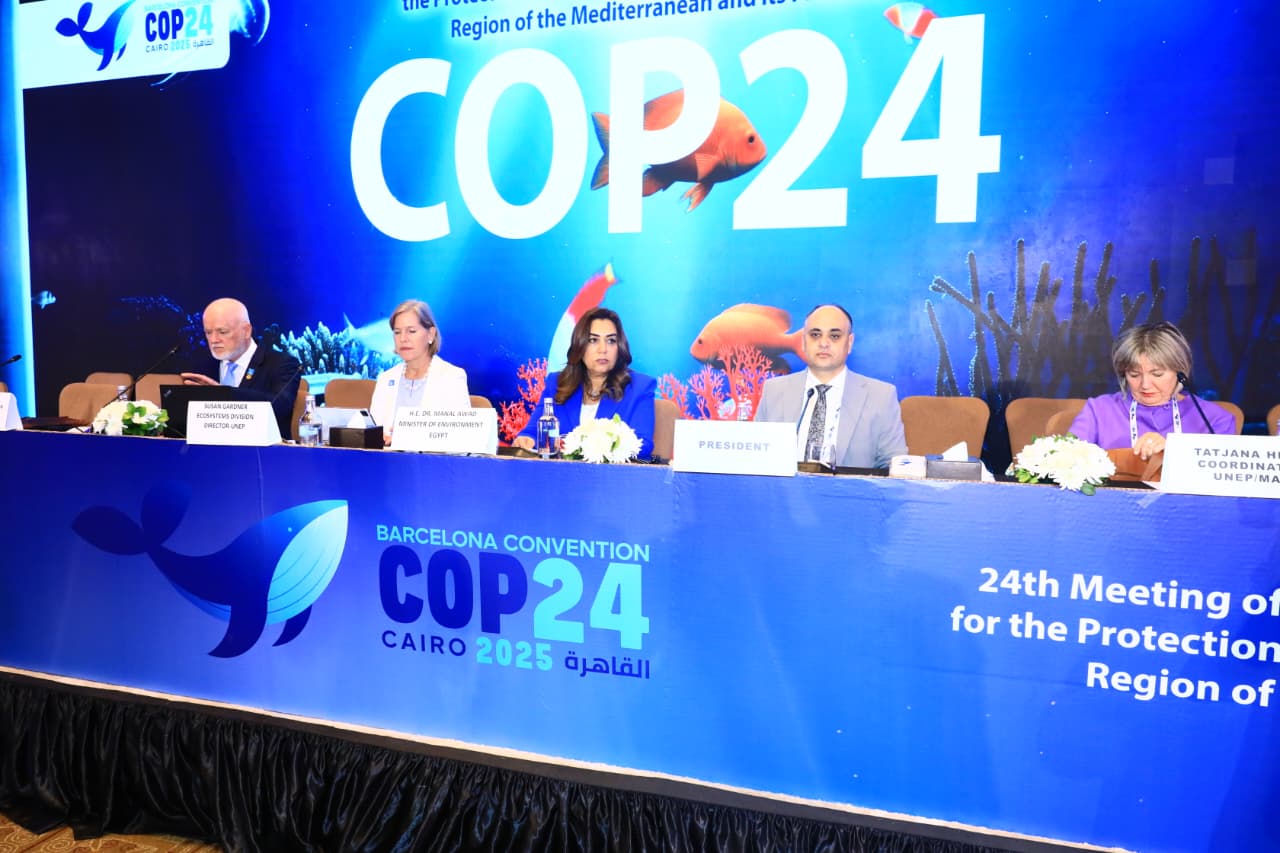
Minister of Local Development, Acting Minister of Environment, and President of the Barcelona Convention COP24 inaugurates the Ministerial Segment of the 24th Meeting of the Contracting Parties to the Convention for the Protection of the Marine Environment and the Coastal Region of the Mediterranean (Barcelona Convention) COP24
Dr. Manal Awad: Egypt’s presidency of the Barcelona Convention COP24 reflects the confidence of Mediterranean countries in its role as an active Mediterranean nation in safeguarding the marine environment
Dr. Manal Awad: We look forward to issuing the “Cairo Declaration,” which reflects the shared political will of Mediterranean countries to achieve sustainability and an inclusive, just blue economy
Dr. Manal Awad: Environmental challenges in the Mediterranean Basin require accelerating implementation, strengthening financing mechanisms, and scaling up nature-based and technology-driven solutions
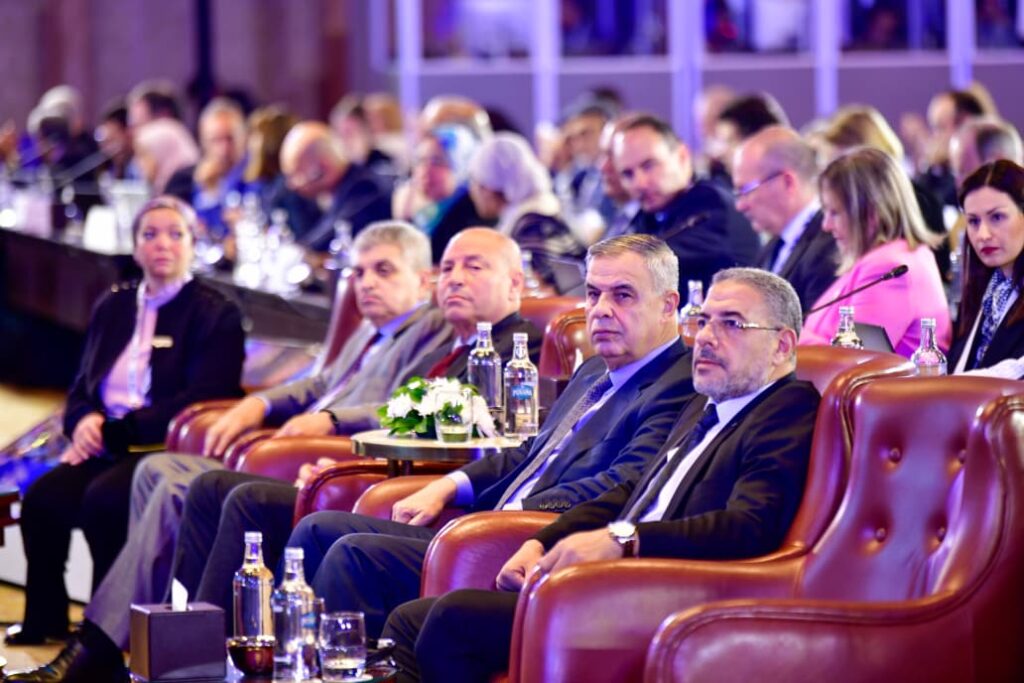
Dr. Manal Awad, Minister of Local Development, Acting Minister of Environment, and President of the 24th Meeting of the Contracting Parties to the Barcelona Convention COP24, inaugurated on, 4 December 2025, the ministerial segment of the conference. The opening was attended by Dr. Ibrahim Saber, Governor of Cairo; Vice Admiral Ahmed Khaled Hassan, Governor of Alexandria; Admiral Osama Rabie, Chairman of the Suez Canal Authority; Ms. Tatiana Hema, Coordinator of the UNEP Mediterranean Action Plan; Ms. Susan Gardner, Director of the Ecosystems Division at UNEP and representative of the Executive Director; Dr. Ali Abou Sena, CEO of the Egyptian Environmental Affairs Agency; ministers and representatives of 21 Mediterranean countries, heads of delegations of the Contracting Parties, regional and international organizations, and civil society representatives.
In her opening remarks, Dr. Manal Awad expressed Egypt’s deep pride in hosting and presiding over the 24th Meeting of the Contracting Parties to the Convention and its Protocols for the Protection of the Marine Environment and the Coastal Region of the Mediterranean. She emphasized that the Mediterranean Sea connects the nations along its shores historically, geographically, and culturally, while placing on them a collective responsibility to ensure its sustainability for future generations. This comes at a time when the region is facing escalating environmental challenges, including marine pollution, increased pressures on coastal ecosystems, climate change impacts, and biodiversity loss.
Dr. Awad highlighted that the Barcelona Convention—signed nearly five decades ago in 1976 and updated in 1995—has become one of the most comprehensive regional and global legal frameworks for the protection of marine environments. Its seven protocols have contributed to building an integrated system addressing pollution from land- and sea-based sources, regulating maritime activities and associated risks, protecting coastal zones and biodiversity, and integrating principles of integrated management and sustainable development.
She explained that the scale of current environmental challenges in the Mediterranean Basin requires accelerating implementation, strengthening financing mechanisms, broadening the deployment of nature-based solutions, and adopting innovation and clean technologies.
The Minister stressed that Egypt’s hosting of COP24 reaffirms its strong commitment to protecting the marine environment, as a Mediterranean country with a long, sensitive, and ecologically rich coastline on which millions of citizens rely for their livelihoods. The Mediterranean is also a pillar for key sectors such as tourism, maritime transport, fisheries, and marine energy.
Dr. Awad added that the Egyptian government, represented by the Ministry of Environment, has in recent years advanced national policies including developing the framework for a participatory blue economy strategy, strengthening marine environmental monitoring systems, protecting environmentally sensitive areas and establishing new marine protected areas, advancing sustainable port and maritime transport infrastructure, implementing plans to reduce plastic and marine litter pollution, integrating environmental and marine considerations into national investment and development plans.
She further noted that selecting the theme of the Blue Economy for COP24 reflects its growing importance as a key driver of development in the coming decades—provided that marine resources are used responsibly and environmental standards are upheld.
Dr. Awad underlined that this year’s Meeting of the Parties comes at a decisive moment for the Mediterranean region, which is among the world’s most affected by climate change and faces accelerating environmental pressures. She expressed hope that the intensive negotiations held over the past two days would lead to the adoption of major decisions, including endorsing the Regional Climate Change Framework, approving biodiversity and marine protected areas plans, supporting governance and the transition toward a sustainable blue economy.
She emphasized that the “Cairo Declaration” will represent a milestone reflecting the shared political will of member states and setting a roadmap to strengthen environmental sustainability, an inclusive and just blue economy, innovation and green transition, climate resilience, and community engagement—particularly for youth and women.
International Statements
Ambassador Peter Thomson, UN Secretary-General’s Special Envoy for the Ocean, thanked the Minister and the Egyptian government for their warm hospitality, stressing the importance of COP24 in supporting regional efforts to protect ocean and Mediterranean health. He warned that human activities—especially rising CO₂ and greenhouse gas emissions from fossil fuels—are causing severe degradation, loss of biodiversity, declining fisheries, and coral reef deterioration. He emphasized the need for strong regional and international cooperation, guided by scientific evidence, to honor global environmental commitments and accelerate action on green transition and circular and blue economies, noting that the future of humanity depends on the health of oceans and seas.
Ms. Susan Gardner, Director of the Ecosystems Division at UNEP, and representative of the Executive Director, expressed her pleasure in participating in COP24 of the Barcelona Convention. She praised Mediterranean countries for their progress under the Mediterranean Action Plan to combat pollution and stressed that the meeting is an opportunity to enhance synergies toward achieving the Sustainable Development Goals and implementing environmental agreements to protect endangered marine species and preserve ecosystems. She highlighted the importance of cooperation to reduce coastal pollution, strengthen investments in the sustainable blue economy, and support sustainable development and energy strategies.
During the opening, a short introductory film was presented showcasing the importance of the Mediterranean Sea to Egypt, the government and civil society efforts to protect it, and Egypt’s aspirations for the Mediterranean region during its presidency of COP24 of the Barcelona Convention.