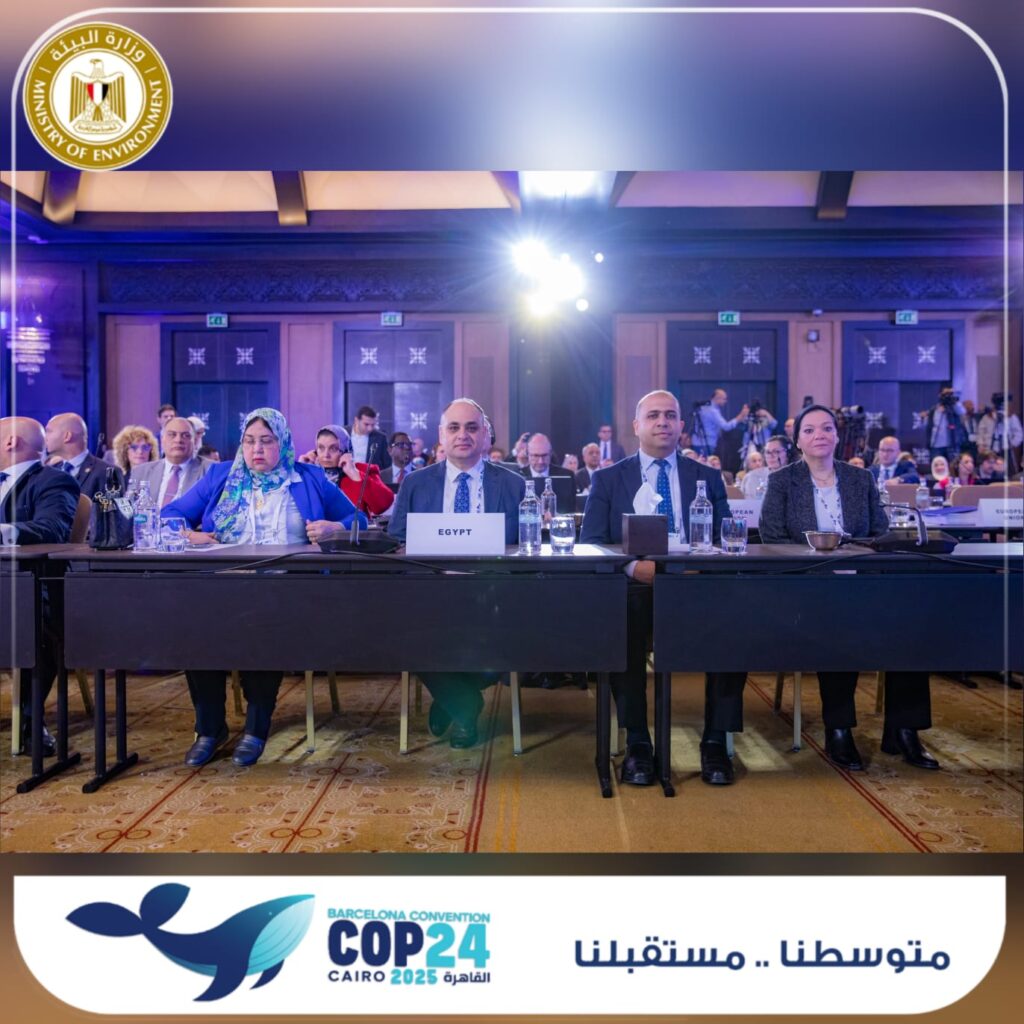
[December 2nd 2025] On the For the First Time, Egypt Assumes the Presidency of COP24- The 24th Meeting of the Contracting Parties to the Convention for the Protection of the Marine Environment and the Coastal Region of the Mediterranean (Barcelona Convention), With the participation of Ministers and Representatives of 21 Mediterranean Countries, and Regional and International Organizations.
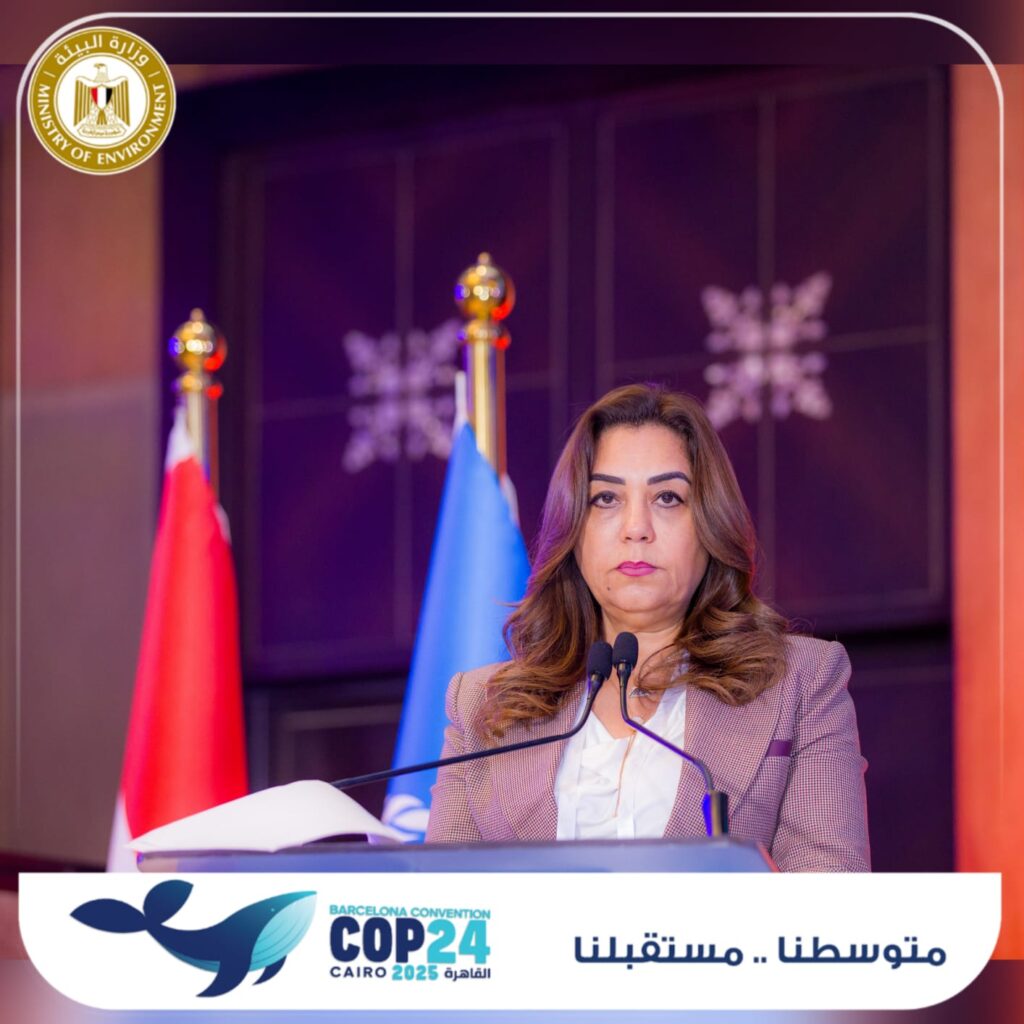
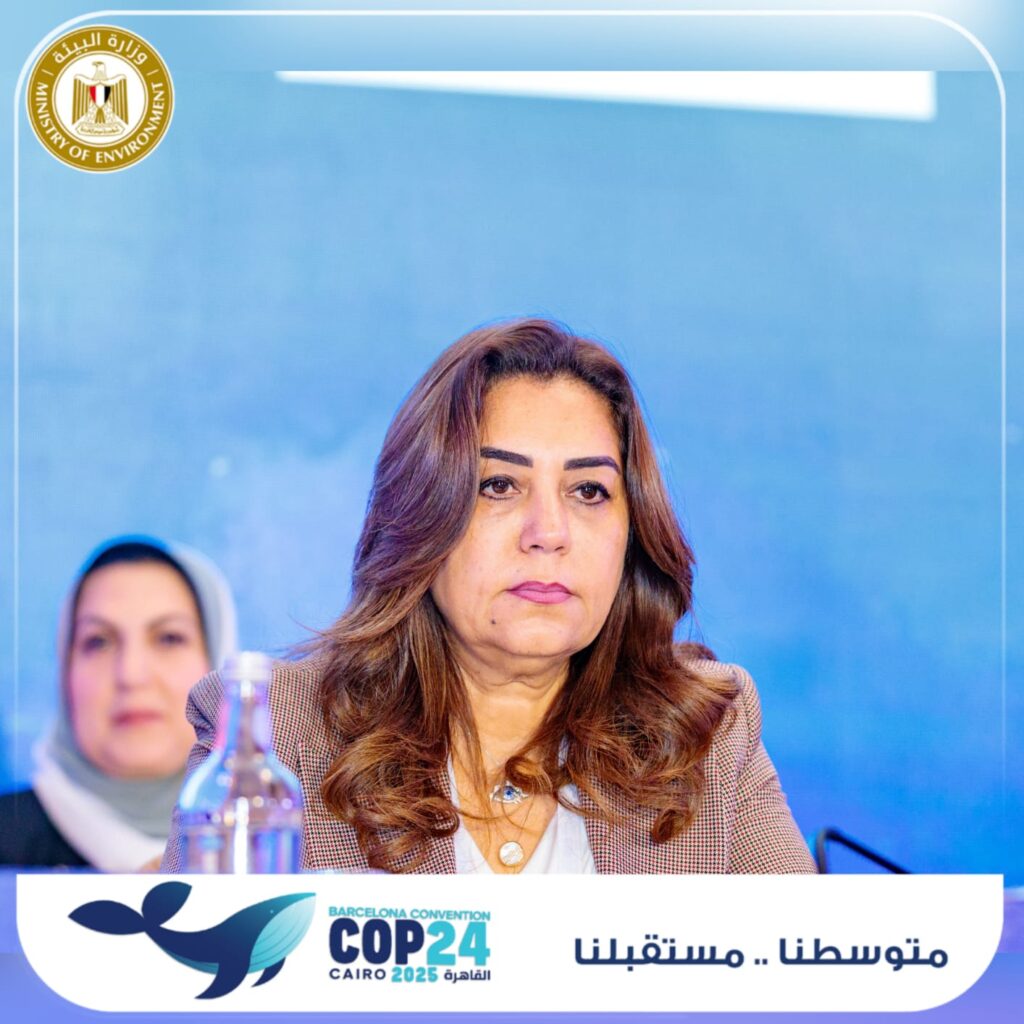
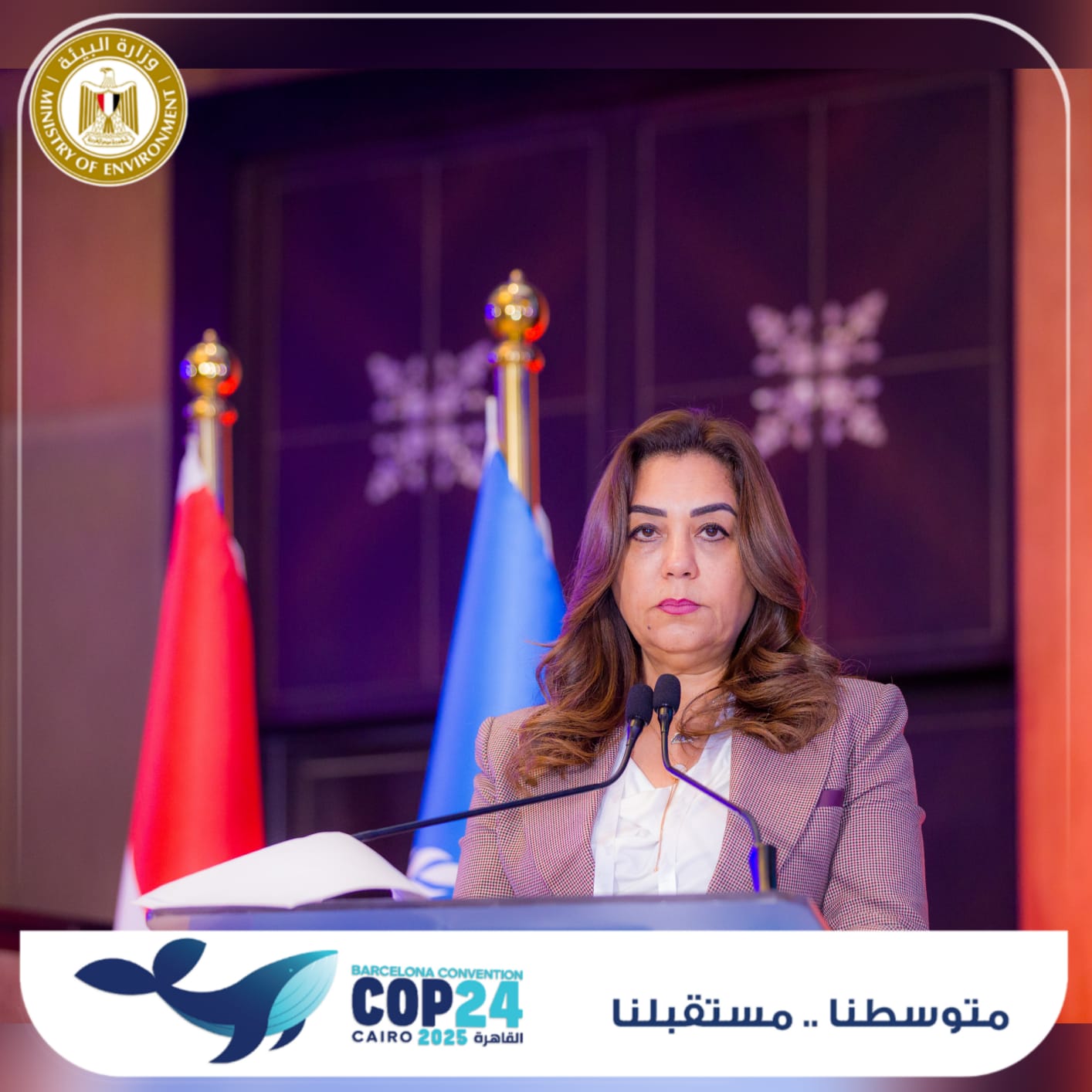
Dr. Manal Awad, Minister of Local Development and Acting Minister of Environment, announced that Egypt has officially assumed the presidency of the 24th Conference of the Parties (COP24) to the Barcelona Convention for the Protection of the Mediterranean Sea from Pollution for a two-years term, and inaugurated the opening of the 24th session.
Dr. Awad: Egypt’s presidency reflects the trust of the Mediterranean community in its effective role in confronting environmental challenges.
The conference provides an opportunity to enhance cooperation and partnerships to protect the Mediterranean environment and advance the green transition.
Dr. Manal Awad reviewed Egypt’s efforts to protect the marine environment and promote the national blue economy, affirming that the marine environment is a lifeline, a source of livelihood for millions, and a fundamental pillar of Egypt’s development path.
Egypt leads the Cairo Declaration, reaffirming the commitment to accelerating the transition toward a sustainable blue economy.
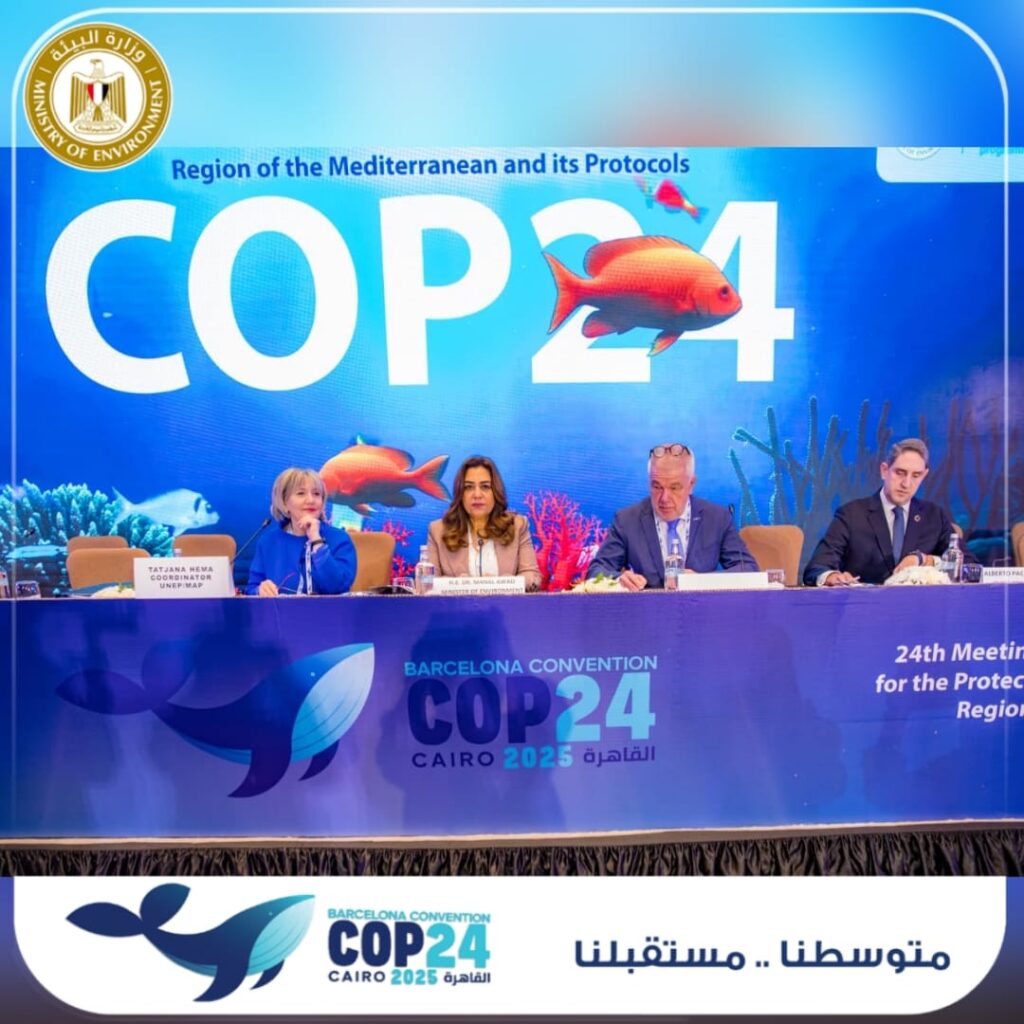
Dr. Manal Awad, Minister of Local Development and Acting Minister of Environment, received the presidency of the Barcelona Convention COP24 from Mr. Mitja Briscely, President of COP23 and representative of Slovenia. She welcomed all delegations and participants to Egypt, in Cairo—the city of civilization and history—and at the heart of the Mediterranean, which unites all its peoples by geography and a shared destiny.
Dr. Awad inaugurated COP24 on 2 December 2025 from Cairo, one of the most important Mediterranean countries, under the theme: “A Sustainable Blue Economy for a Resilient and Healthy Mediterranean Sea.”
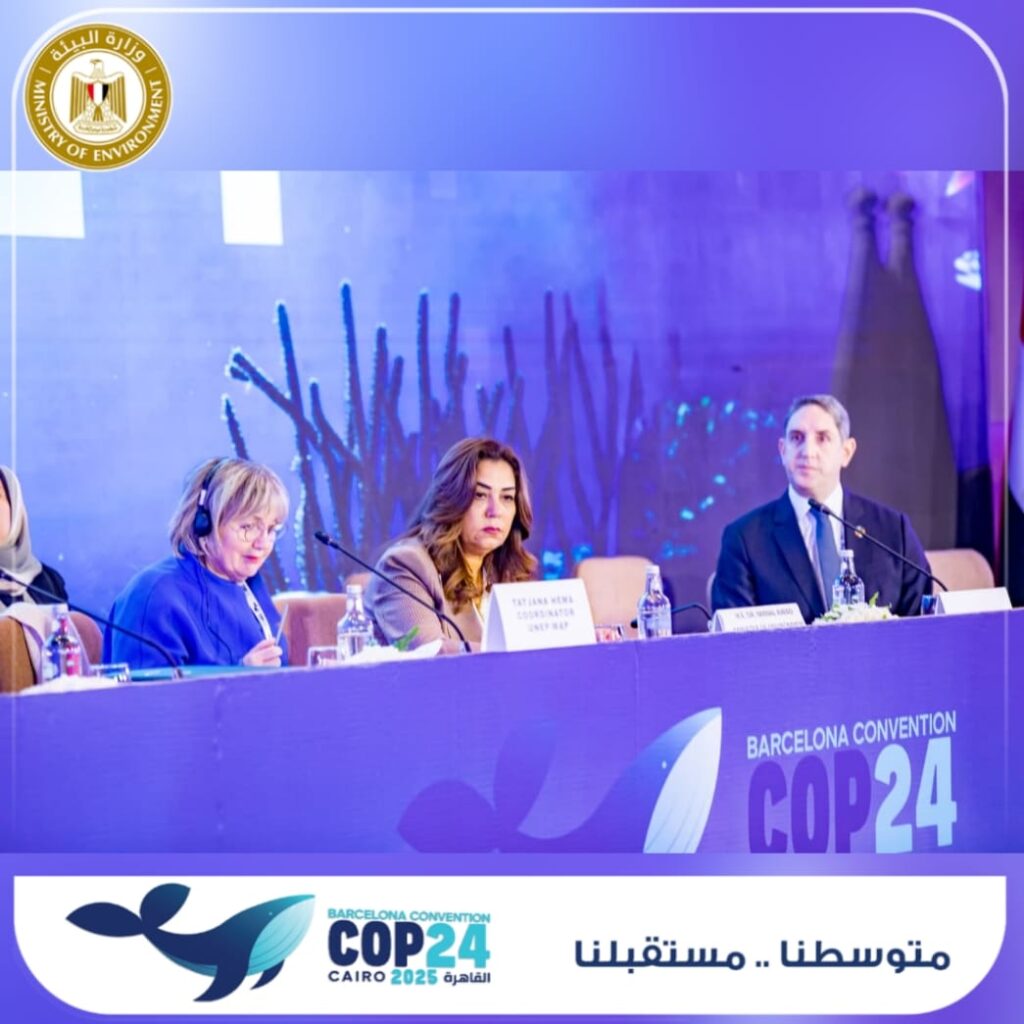
The event features the participation of ministers and representatives of 21 Mediterranean countries, regional and international organizations, Ms. Tatiana Hema, UNEP/MAP Coordinator, Mr. Mitja Briscely, current COP President and representative of Slovenia, heads of official delegations, and civil society representatives.
In her speech, Dr. Awad affirmed that hosting COP24 in Cairo carries profound significance, reflecting the trust of the Mediterranean community in Egypt’s active and ongoing commitment to protecting the marine and coastal environment and strengthening regional cooperation for a clean, sustainable, and safe Mediterranean for future generations. She emphasized that Egypt’s marine and coastal environment is a fundamental pillar of its economic, social, and developmental progress.
She highlighted that Egypt’s coasts extend more than 3,000 km along the Mediterranean and Red Sea—forming a lifeline and a source of food, energy, tourism, and trade for millions of Egyptians. From fisheries and ecotourism to maritime transport and blue energy, Egypt’s coastal zones represent a critical intersection between sensitive ecosystems and intensive economic activity, making integrated coastal management a strategic necessity, not a choice.
Dr. Awad stressed that Egypt has given great importance to protecting its marine environment through the National Climate Change Strategy 2050, the National Biodiversity Strategy 2030, and under its international obligations to the Barcelona Convention and its protocols.
In recent years, Egypt has adopted an integrated approach centered on transitioning toward a sustainable blue economy as a main pathway for low-emission, comprehensive development.
Dr. Awad explained that, with the support of political leadership, an integrated national framework for the blue economy has been developed, covering environmental, economic, social, and institutional dimensions. It aims to align national efforts toward the sustainable use of marine resources, green innovation, and investment in nature-based solutions.
She added that the Ministry of Environment, in cooperation with the World Bank and several international partners, is currently preparing Egypt’s first integrated National Blue Economy Strategy, which will provide a clear roadmap for maximizing sustainable use of marine resources by developing value chains in sectors such as ecotourism, Sustainable fisheries, marine renewable energy, Low-carbon maritime transport, Blue innovation and technology, and green financing mechanisms to support private-sector investments in blue economy projects
Dr. Awad stated “We view the blue economy not only as an environmental concept, but as a new economic model capable of generating sustainable growth, creating decent jobs, enhancing food security, and protecting marine biodiversity.”
She expressed hope that the coming days would lead to key decisions that will shape Mediterranean cooperation over the next decade, including The Mediterranean Strategy for Sustainable Development 2026–2035, The Regional Framework for Climate Change Adaptation in marine and coastal areas, The updated Mediterranean Environmental Monitoring and Assessment Programme, The Cairo Ministerial Declaration, led by Egypt, as a unifying document reflecting collective commitment to accelerating the transition toward a sustainable and inclusive blue economy.
Dr. Awad stressed that COP24 will serve as a platform to enhance cooperation and partnerships among Parties, regional organizations, and financial institutions through green financing tools, innovation, and science-based policy. She emphasized that protecting the Mediterranean is a shared responsibility, and Egypt believes that the path to a healthy, sustainable marine environment depends on integrating science, policy, and finance, supported by partnerships built on trust and mutual responsibility.
Mr. Mitja Briscely, President of COP23 and representative of Slovenia, expressed his appreciation to Egypt for its warm hospitality and excellent organization. He highlighted the importance of continuing the long-standing cooperation among the Parties to the Barcelona Convention, which has lasted for more than 50 years and spans three continents—Africa, Asia, and Europe. He stressed that protecting the Mediterranean and its ecosystems is essential for improving quality of life and advancing sustainable development, which is the core mission of the Barcelona Convention. He noted that it also contributes to implementing the Biodiversity and Climate Change Conventions, forming a vital tool for future generations. Mr. Briscely added that COP24 opens the door for youth participation through their ideas, proposals, and innovations.
He stated:
“We are celebrating 50 years since the signing of the Barcelona Convention and 30 years since its revision under the Mediterranean Action Plan. Over the next four days, we will discuss major topics including the updated Mediterranean Strategy for Sustainable Development 2026–2035, the Regional Framework for Climate Change Adaptation 2026–2035 , and the revised Ecological Approach Roadmap for the Mediterranean region.”
Ms. Tatiana Hema, UNEP/MAP Coordinator, emphasized that the Mediterranean region has undergone significant changes over recent years, suffering from pollution and biodiversity loss—calling for urgent solutions to ensure a sustainable future and economy for the region based on climate resilience and combating plastic pollution. She praised the achievements of the Contracting Parties over the past 50 years through collaboration and solidarity, and expressed hope that COP24 decisions will set a new direction toward cleaner coasts and greater sustainability. She thanked the Government of Egypt for their warm hospitality from the heart of historic Cairo, and congratulated Egypt on the opening of the Grand Egyptian Museum—an iconic testament to the greatness of ancient Egyptian civilization.
Mr. Alberto Pacheco Capella, Head of the Regional Seas Programme at UNEP, thanked Egypt’s leadership and excellent hosting of COP24 , noting that the meeting comes at a crucial moment as a catalyst for member states to strengthen cooperation in addressing the region’s pressing environmental challenges.
He highlighted that the COP convenes at a decisive time to build upon the Mediterranean Action Plan’s progress in linking science and technology to policymaking, which has enabled stronger cooperation among Mediterranean countries. He added that this conference offers an opportunity to deepen joint action and to enhance governance in areas beyond national jurisdiction.
During the opening ceremony, a documentary film on the importance of the Mediterranean Sea and efforts to protect its environment was screened .